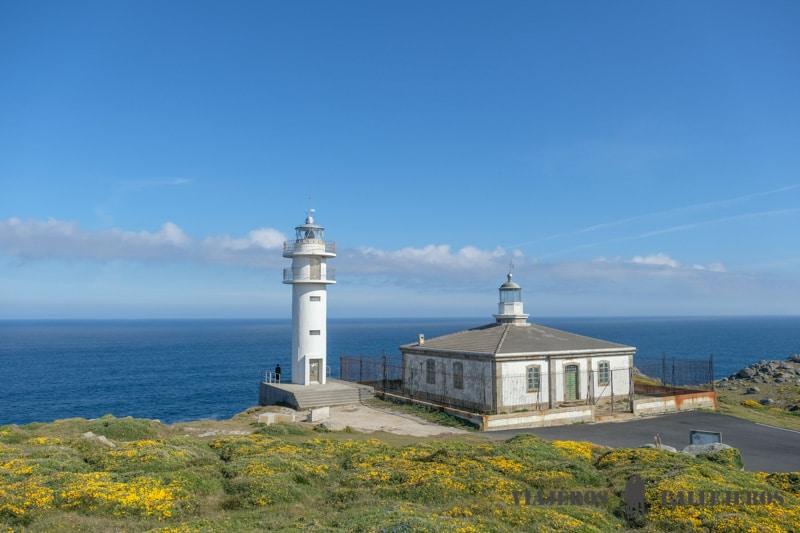
With this selection of travel tips for Germany, we want to help you prepare for your trip to one of the most diverse and incredible countries in the world, and one that is also very easy to get around.
Known by many for its fairytale landscapes, charming villages, romantic palaces and multicultural Berlin, Germany is a country that we recommend you to get to know, either by doing a roadtrip or different getaways from your place of origin.
Based on the different trips we have made to this country, about which we have written this guide to Germany, we would like to give you a selection of what we consider to be the 10 essential tips for travelling to Germany. Let's get started!
1. When is the best time to travel to Germany?
Although, as in other countries, we could say that any time of year is a good time to visit Germany, taking into account the climate, we can divide the year into three very different seasons.
High season (July and August): these two months of the year are the busiest and, for the last two years, the hottest. Although this is the perfect time to enjoy festivals and outdoor activities, be aware of the overcrowding and high temperatures in some parts of the country, such as Berlin.
Mid-season (April to June and September to October): In our experience, the best time to travel to Germany is during these months when the tourist sites are less crowded and the weather is much milder.
Low season (November to March): These are usually the coldest months of the year and the rainiest. Except if you want to travel at Christmas to enjoy a charming area such as the Black Forest or practice winter sports, this would be the least advisable time of year.
Remember that in case of travelling in high season or at Christmas, it is highly recommended to book flights and accommodation well in advance in order to have the maximum of options and find more affordable prices.
2. Entry requirements
To travel to Germany as a Spanish or European Union (EU) citizen, you will only need to carry your ID card or passport as an entry requirement. If you have another place of origin, we recommend that you check the website of your country's Ministry of Foreign Affairs or the German Embassy for information on the entry formalities for your country.
Due to the current health situation, all Mondo insurances include medical assistance in case of coronavirus infection. Also included is the extra stay you need in case of quarantine infection and of course, the test in case it is necessary.
3. Safety
Germany is one of the safest countries in the European Union, although as in all destinations, it is important to take precautions and travel with common sense. With this in mind, it is advisable not to keep an eye on valuables when you are in crowded tourist areas, ask your hotel if there are any areas in the city that are not advisable if you are travelling alone, as well as going at night to places you know and know are not dangerous.
If you are going to rent a car in Germany, it is important to know that the maximum blood alcohol level is 0.05% and if you exceed it, you may face a fine and a prison sentence.
In addition to the above, another tip for travelling to Germany, as to any destination, is to carry a copy of your personal documentation, such as passport, ID card, insurance policy, etc. in the cloud so that in case of loss or theft, it will be much easier to carry out any kind of procedure.
 Dresden
4. How do I start my trip to Germany?
The first and most important thing to take into account is to determine whether you want to make a trip around Germany or you want to visit some of its most famous cities or areas, something that will depend largely on the number of days you have.
Whichever option you choose, the most common means of transport is by plane, with dozens of options including, depending on the destination, low cost airlines such as Ryanair and EasyJet. To find the one that best suits your needs, we recommend using a search engine such as Skyscanner.
In case you have chosen to do a roadtrip, it is highly advisable to rent a car, because although public transport in Germany is very effective, having a car that gives you freedom of schedules and movements, is a real luxury.
If you don't want to use the car and want to get around some of the main cities in Germany, another option is the train, a very convenient and fast option.
Once you've sorted out transport, and especially if you're travelling in mid or high season, it's a good idea to check out the different accommodation options. We always use this hotel search engine to find the best options at the best prices.
And last but not least, it is highly recommended to check the different excursions that you can do in the country, so you can book them, especially if you are travelling in high season, to make sure you get a place. You can see all the excursions and tours in Germany here.
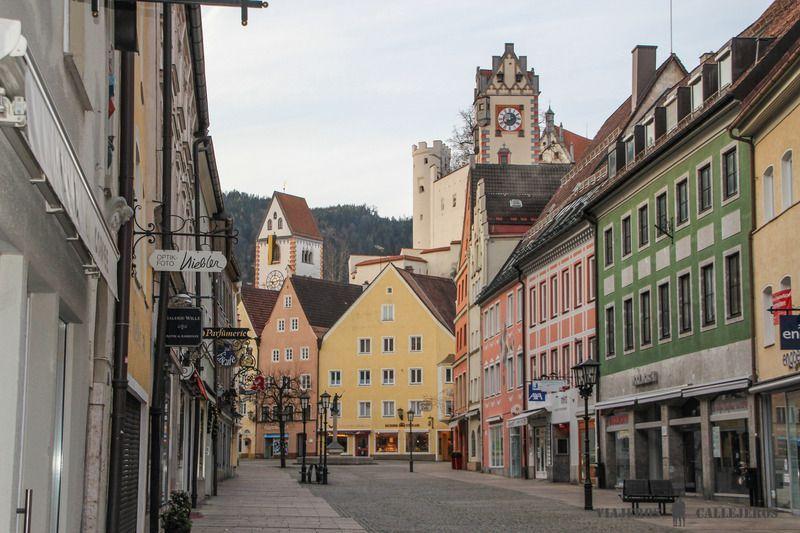 Germany
5. Tours in Germany
A trip to Germany by car or train will allow you to see some of the must-see places in Germany, through which you can enjoy incredible landscapes, charming villages that are anchored in time, cities with a great weight in the history of the country and the world, as well as a gastronomy that we are sure will be another of the pleasures of the trip.
Although as you can imagine there are hundreds of options when travelling to Germany, we suggest you start your trip in Berlin, its most cosmopolitan city, where we recommend you stay for 3-4 days to get to know its most touristy places.
From here the route would continue south, stopping for one or two days in Dresden, capital of Saxony, which during the Second World War suffered one of the worst bombings, which took away most of its historic centre, but which today looks wonderful after reconstruction.
After this stop, the route through Germany continues to Würzburg where you will start the Romantic Road, a 400-kilometre route through castles, palaces, historic towns, fairytale villages and incredible landscapes, where you will get to know the charming Rothenburg ob der Tauber, one of the most beautiful towns to visit in Europe, the castles of Dinkelsbühl and Colmberg, the area of Pfaffenwinkel, famous for its churches, and Augsburg, before finishing the route in Füssen, where the famous Neuschwanstein Castle awaits you.
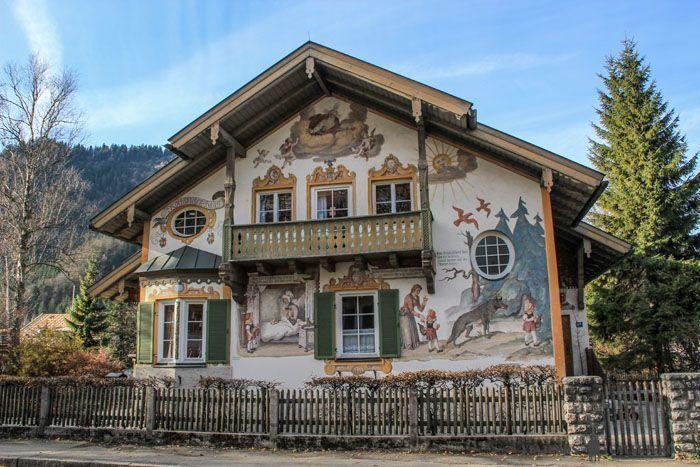 The village of Oberammergau
At this point you will enter Bavaria, another of the most incredible areas of Germany, where in addition to the castle, you cannot miss a visit to its capital Munich, with an impressive historic centre, the village of Oberammergau, a charming town, located in the south of Bavaria and known for the facades of its houses painted with scenes from children's fairy tales.
You can find out more about this area by reading this post on essential travel tips for Bavaria.
From here, the next stop will be Quedlinburg, one of the most beautiful cities in Germany, which stands out for its more than 1,200 half-timbered houses, built from the 15th century onwards. Then you can head to Lake Constance, located between three countries: Switzerland, Austria and Germany, where you can spend a few days relaxing around it while enjoying medieval villages and exceptional landscapes.
The last suggestion for this trip to Germany is to take a route through the Black Forest, a region of dreamy landscapes and wooden houses and farms, where you can't miss Gengenbach, Sasbachwalden, Seebach, Durbach and Triberg, with its famous waterfalls.
6. Berlin
Another highly recommended way to get to know Germany, as we mentioned earlier, is to make different trips to different parts of the country.
First and foremost, and as a goal of many travellers, we believe that Berlin is undoubtedly one of the must-visits when travelling in Germany, as it is the capital of the country as well as a city with character and a difficult to digest history, which was completely rebuilt after the Second World War.
Taking into account the amount of visits that can and should be done in the city, we recommend you to dedicate at least 3-4 days to visit the must-see places in Berlin, among which are the Brandenburg Gate and the Unter den Linden, the East Side Gallery, Alexanderplatz, the Museum Island, the Berlin Cathedral, the Holocaust Memorial and the Reichstag, among many others.
Remember that you can book the Berlin Pass to get into most of the city's sights to save time and money.
Based on the experience of our two visits to the city while travelling in Germany, we've put together these four guides to help you make sure you don't miss anything important in Berlin.
Berlin in one day
Guide to Berlin in two days
3-Day Guide to Berlin
Guide to Berlin in 4 days
In addition to following these guides we recommend you to know the painful history of the city by booking this guided tour of Berlin or this Free tour of Berlin, both with guide in English and the latter considered one of the best free tours in Berlin for free in English.
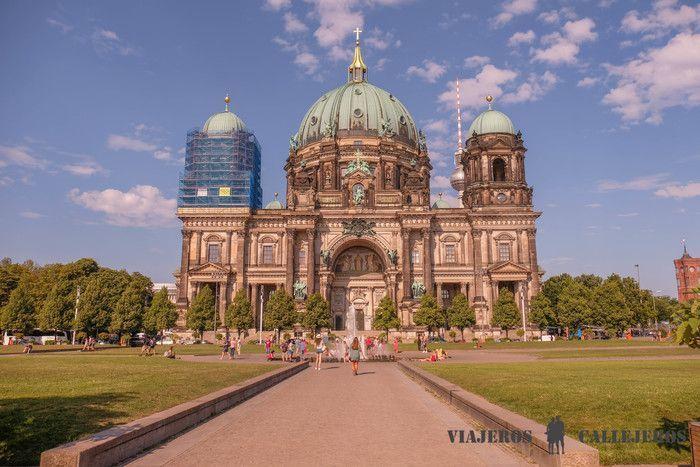 Berlin
After doing all the proposed visits around the city and if you have an extra day, we recommend you to do some of the best tours and excursions from Berlin such as the Sachsenhausen Concentration Camp, Potsdam or Dresden, where you can't miss a route through the 10 must-see places in Dresden.
All these excursions can be done on your own, renting a car or using public transport, although another more convenient option is to book one of these excursions with an English-speaking guide:
Sachsenhausen Concentration Camp
For more information on this city, check out this post on essential tips for travelling to Berlin.
7. Munich in Bavaria
Known for being the largest region in Germany and with endless places to visit, if your getaway is 4-5 days, as we did, we recommend starting with Munich, its capital where you can not miss places like Marienplatz and New Town Hall, Viktualienmarkt, a stop at the Hofbräuhaus Brewery, which is one of the things to do in Munich, a walk in Englischer Garten or a visit to Residenz, among many other places to visit in Munich essential.
Based on the experience of our visit to the city, we have compiled these three guides that will serve as a reference so that you don't miss anything important in Munich.
One-day guide to Munich
Munich in two days
Guide to Munich in 3 days
In addition to following these guides to travel to Germany, we recommend you to get to know the history of the city by booking this guided tour of Munich or this Free tour of Munich, both with a guide in English and the latter is considered one of the best free tours in Munich in English.
If you have an extra day, it is highly recommended to take a trip to Neuschwanstein Castle, Dachau concentration camp or Salzburg, considered some of the best tours and excursions from Munich.
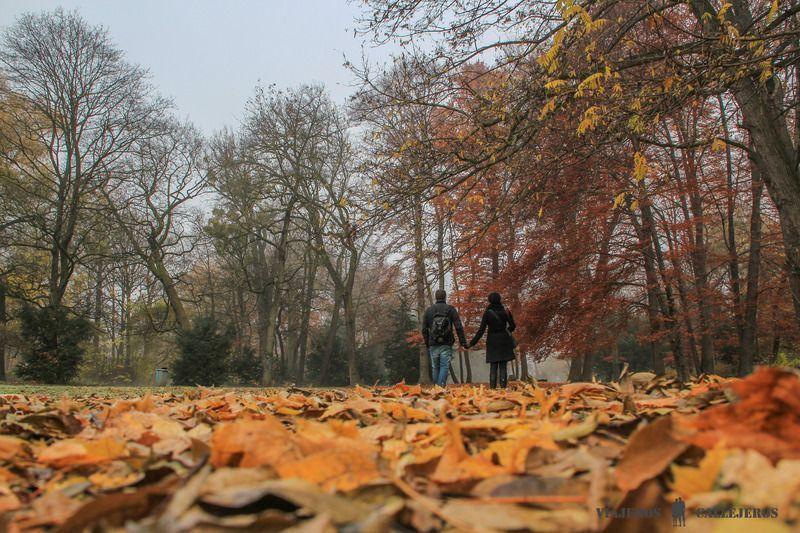 Munich
8. Black Forest
A destination for many travellers, this area of Germany is known for being one of the most beautiful landscapes in the south of the country, where you can enjoy rivers, waterfalls, lakes and endless forests, dotted with half-timbered houses that will take you back in time.
In addition to the charming towns of Gengenbach, Sasbachwalden, Seebach, Durbach and Triberg, with their famous waterfalls, you can't miss the cities of Freiburg and Baden Baden on your route through the Black Forest on your trip to Germany.
As another tip for travelling to Germany we would say that it is very advisable to make this route in a rental car to have total freedom of movement and schedules and to have 5-7 days to know and enjoy its most famous and touristic places.
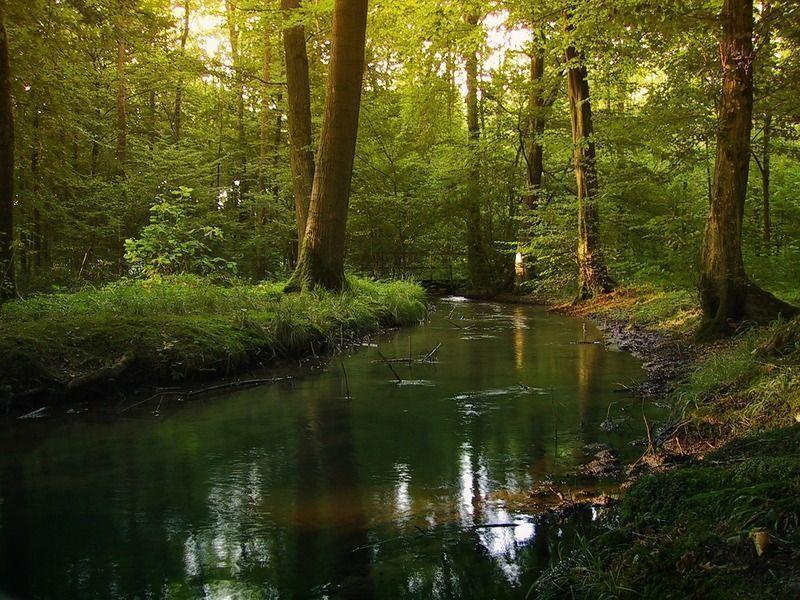 The Black Forest
9. German gastronomy
Another of the most recommended tips is to try and taste the fabulous (and sometimes hearty) German gastronomy. Although we know it is impossible to mention all the dishes, we would like to leave you with a selection of some of the most famous and delicious dishes that you cannot miss on your trip.
Pork knuckle: pork cooked in the oven, usually with pea puree.
Kartoffelsalat: potato salad.
Kartoffelsuppe: potato soup with onions, carrots and various spices.
Pretzel: savoury bread that is usually eaten as a snack and is round or ribbon-shaped.
Sauerkraut: fermented cabbage that is often served as a garnish for many German dishes, including the famous German sausages.
Currywurst: Undoubtedly one of Germany's signature dishes. Although there are dozens of options, one of the most famous is the currywurst, a sausage seasoned with curry, which is a must-try.
Apfelstrudel: apple pie - delicious!
 Currywurst
10. More travel tips for Germany
Other top tips for travelling to Germany:
Although most Germans speak English, if you want to get off on the right foot it is highly recommended to learn some German words such as hallo (hello), buenos días (guten morgen), buenas tardes (guten abend), buenas noches (guten nacht), hasta luego/hasta pronto (auf wiedersehen), si (ja), no (nein), gracias (danke) and de nada (bitte).
Remember that to avoid paying fees and to always have the current exchange rate, we recommend using the Revolut card and the N26 card, which we use, are free of charge and will save you a lot of money. You can find more information in this article on the best cards for commission-free travel.
Remember that in Germany, on some stretches, there is no speed limit on the motorways. Nevertheless, always drive with caution and respect the signs and regulations.
In Germany, breakfast is usually from 6.30am to 9am, lunch from 12pm to 2pm and dinner from 7pm to 8pm. Although there are restaurants in big cities that usually have continuous opening hours, in many small towns they close between services. Keep this in mind so that you don't miss lunch.
In Germany the voltage is 230V, the frequency is 50 Hz and the plugs are type F.